


We bought our first Clay license on AppSumo on July 10, 2023. Hilariously, by the end of it’s AppSumo run, it had just 3.5 Tacos.
Back then Clay started as an “AI Relationship Manager” that could write emails to engaged contacts for you. Cool. There was no hype cycle or LinkedIn influencers posting waterfall tutorials, no “Clay” as shorthand for outbound enrichment. We saw what the platform could become before most people understood what it was: an orchestration layer. We saw a place where you could build the logic that sat between raw data and usable intelligence.
Since then we’ve built Clay orchestration for 35+ clients across every use case the platform supports: inbound enrichment, outbound list building, account scoring, CRM hygiene, and signal detection. We know this product so well we can hear when something’s off by how a table runs, the same way a mechanic knows something’s off by the sound of an engine.
So when Clay rolled out a new pricing model in March 2026 and announced it as a win for customers, we didn’t take the press release at face value. We did what we always do. We read the documentation (all of it) – the pricing page, the internal memo they published, the legacy plan docs, the Actions and Data Credits explainers, the AI pricing breakdowns, the community threads, and the old blog posts about previous pricing versions. Many hours of research across every public source we could find.
What we found wasn’t a simple price cut. It was a fundamental restructuring of how Clay captures revenue. And depending on how you use the platform, it might save you money or it might cost you more. The difference comes down to a question most users haven’t thought to ask.
The old system was elegant but exploitable
Once Clay turned into the data platform it is today, the original pricing model was beautiful in its simplicity. You bought a plan, it came with credits and the credits got consumed when you did things like enrichments, AI prompts, provider calls, or workflow steps. There was one meter for everything.
That simplicity made Clay easy to adopt and easy to explain but it also created a specific kind of user behavior that Clay almost certainly did not intend to subsidize forever.
Power users figured out the game quickly. Test on small batches before running full tables, order your waterfall providers from cheapest to most expensive, filter companies before enriching contacts, use conditional logic so expensive steps only fire when prerequisites are met, run free or cheap steps before paid fallbacks, disable auto-runs until workflows are locked, set AI spend limits and watch the dashboard like a hawk.
These weren’t hacks. Clay’s own documentation taught some of these tactics. They were rational responses to a system that rewarded careful orchestration.
But here’s the thing that matters: the most sophisticated users took this further. They brought their own API keys. They routed their own data providers through Clay’s HTTP request actions. They used Clay as a pure orchestration shell, consuming credits for the workflow logic while paying their vendors directly for the data.
From the user’s perspective, this was brilliant. It meant maximum flexibility, with minimum spend.
From Clay’s perspective, this was a leak. Those users were getting the full value of Clay’s platform: the routing, the conditional logic, the table structure, the integrations, plus the AI layer, and Clay was barely capturing any of the economics. The platform work was being consumed without being properly metered.
Two meters where there used to be one
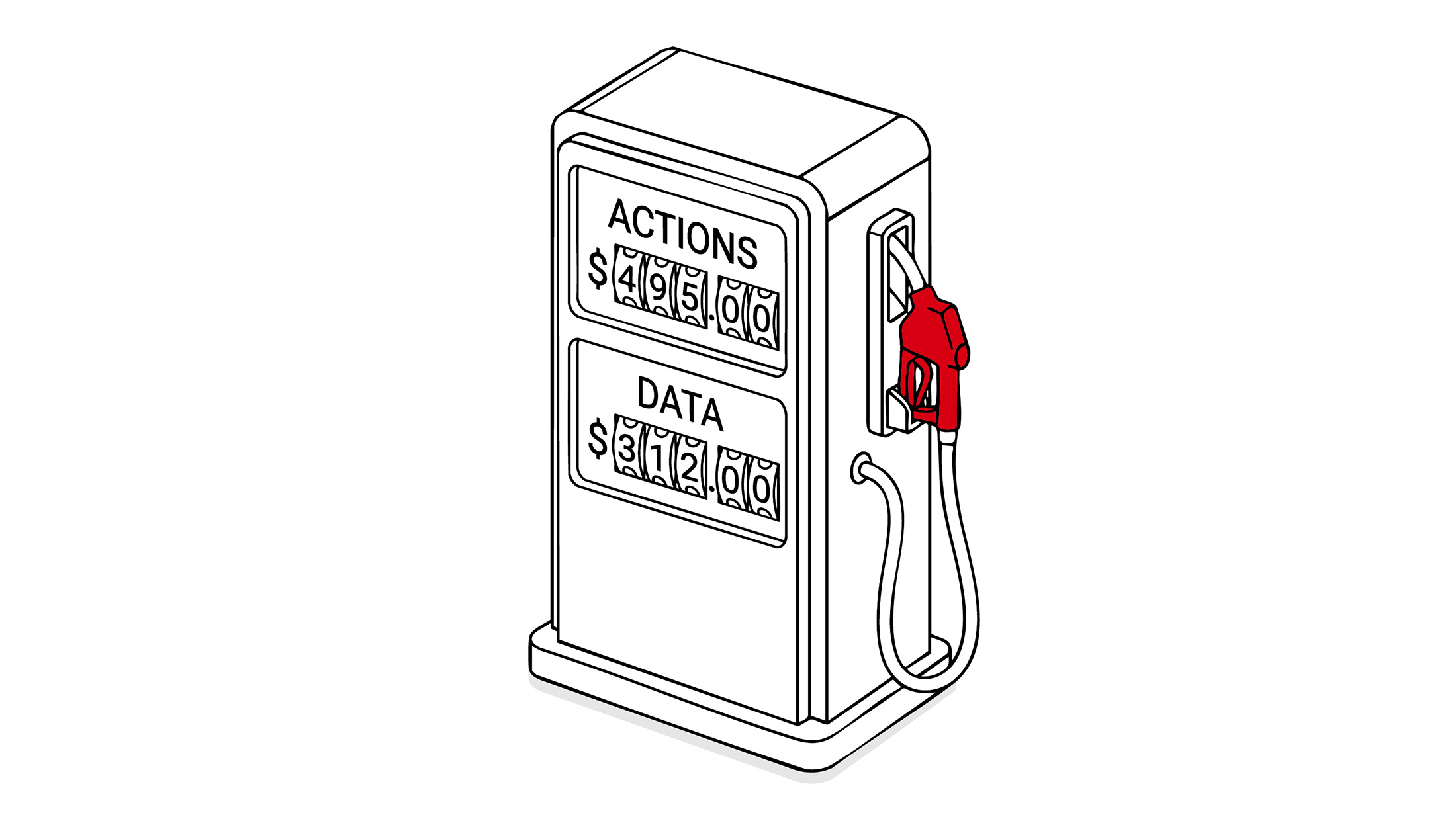
The new model splits that single credit system into two distinct meters.
Actions measure platform usage. Every time Clay does work on your behalf, whether that’s running an enrichment, calling a provider, executing an AI prompt, or processing a workflow step, it costs Actions. Actions reset every billing cycle.
Data Credits measure data purchases. When you buy enrichment data through Clay’s marketplace of 150+ providers, you spend Data Credits. These can roll over within plan-specific limits.
The critical distinction: if you bring your own API keys and route your own vendors through Clay, you might reduce your Data Credit spend but Clay still charges you Actions for the platform work. The orchestration layer is no longer free.
Clay says data prices dropped 50 to 90 percent on many enrichments under the new system. They also say 90 percent of customers won’t hit their Action limits. Both of these claims may be true. But observe the math for a second.
If data is dramatically cheaper and most people won’t exhaust their Actions, where does the new revenue come from?
It comes from the users who were previously getting a free ride on the orchestration layer. The API-heavy power users – agencies running Clay as a workflow shell and builders who used Clay’s infrastructure while paying Clay almost nothing for it.
Who Wins, Who Loses, and Why
The community reaction tells the story pretty clearly. In Clay’s own public announcement thread the sentiment splits along predictable lines.
Users who buy most of their data natively through Clay’s marketplace are likely seeing real savings. They’ve got cheaper enrichments, access to advanced features at a lower price point than the old Pro tier (the new Growth plan runs $495 a month), and a more transparent breakdown of where their money goes. If you’re a revenue team that runs standard enrichment workflows and buys data through Clay’s built-in providers, the new model probably is cheaper. Clay isn’t lying about that.
But the power users noticed something else. One community member pointed out that HTTP function calls actually cost more under the new system than they did before. Another noted that if a team uses a heavy volume of API and HTTP calls, staying on the legacy plan is the better deal. A small-business user said Clay’s new pricing was pushing people like them out of the platform entirely.
These aren’t contradictions. They’re the natural result of a pricing model that now charges for two different kinds of value instead of one. If your usage skews toward data purchases, you benefit. If your usage skews toward orchestration, you pay more for what used to be bundled in.
The Growth tier at $495 a month does open up advanced features that previously required the more expensive Pro plan. That’s a legitimate improvement for mid-market teams who want access to better tooling without the old price tag. But the Actions meter means that high-volume builders, the users who were squeezing the most value out of Clay’s flexibility, now face a new line item they didn’t have before.
What this is really about
Strip away the pricing details and a clearer picture emerges. Clay is maturing from a flexible, credit-based enrichment tool into a GTM operating layer with infrastructure pricing to match.
The old model was growth-stage pricing. Simple, generous, designed to get users in and let them explore. That kind of pricing builds love and loyalty and market share. It’s also the kind of pricing that leaks money as the most sophisticated users figure out how to extract maximum value at minimum cost.
The new model is scale-stage pricing. It’s more complex, more precise, designed to capture revenue proportional to the value Clay’s platform actually delivers. When a customer uses Clay’s orchestration layer, Clay now gets paid for it regardless of where the data comes from. That’s a structurally better business.
If you’ve watched how SaaS platforms evolve, this pattern is familiar. Usage-based models almost always start simple: one meter, one credit, one unit of consumption. As the company scales and the user base diversifies, the single meter stops reflecting reality. Some users consume a lot of one thing and almost nothing of another. The company realizes certain high-value behaviors aren’t being monetized. So they add meters. They separate data from compute, or storage from queries, or seats from usage.
It’s the same physics. Clay just made the transition more visible than most.
The Broader Lesson
We still think Clay is one of the most important tools in the modern GTM stack. The platform’s ability to orchestrate data waterfalls across dozens of providers, apply AI-driven research and scoring, and sync clean data into systems is genuinely hard to replicate. We will keep building in Clay and we will keep recommending it to clients where it fits.
This pricing shift is worth understanding because it reveals something about how revenue systems mature, and that’s a topic we think about constantly.
Every platform has a revenue architecture. That architecture creates incentives. Users respond to those incentives rationally. Over time, some of those rational responses become optimization patterns that work against the platform’s economics. The platform notices. The platform restructures.
Clay’s old model incentivized users to minimize data spend and maximize orchestration usage. The new model re-prices those behaviors. The optimization playbook that worked for three years just changed.
If you’re a Clay user, the practical move is straightforward. Audit your current usage. Figure out how much of your spend is data purchases versus orchestration work. Model what your bill looks like under the new system before you migrate off a legacy plan. If you’re data-heavy, you’ll probably save money. If you’re orchestration-heavy, run the numbers carefully.
If you’re a revenue leader thinking about GTM tooling more broadly, the lesson is bigger. The platform you build on will eventually restructure its economics around the value you extract. That’s just how systems work. The best time to understand the incentives baked into your tools is before they change.
We spent many hours reading the fine print so you could spend 10 minutes reading this. If it saves you from a surprise on your next invoice, it was worth it.
I guess I'm wondering, if Levver were consulting for Clay, is this the exact move they would've recommended? Or would a different pricing structure be more profitable?